Monday, October 19, 2015

Wiki


Hey Irie Jammers, you all know by now that I love all things Caribbean, well take a look at the link below of what I edited and contributed to on Wikipedia. Enjoy!!!!!

https://en.wikipedia.org/wiki/Saint_Ann_Parish#Natural

Saturday, October 17, 2015

Old Versus New

Hey Irie Jammers, today we will be talking about Old vs New Media, lets get right into it.

Traditional Media can be explained as TV, radio, direct mail, billboards, etc. It is an “push” strategy, meaning the message is being output by the business. It is a one-way, direct message that can be costly, yet instantly impactful. Traditional media is gauged by short-term results.
New Media can be explained as social media (Facebook, Twitter, YouTube), search engine marketing, search engine optimization, blogs, etc. It is a “pull” strategy, meaning it is conversational between consumer and business. It is interactive and inexpensive to campaign, and it can yield measurable progress. New media is gauged by long-term results.

Traditional Media
  • One to many communication
  • Mass marketing that’s not targeted
  • Monologue message
  • Focuses more on branding than communication
  • Supply side thinking
  • Customer as a target
  • Segmentation
  • Mainly offline techniques
  • Aims at mass awareness
  • Doesn’t use many insights or data for decision making
New Media
  • One to one or many to many communication
  • Personalized, mass customization and targeted
  • Dialogue
  • Focuses more on communication than branding
  • Demand side thinking
  • Customer as a partner – CRM, feedback
  • Communities
  • Predominantly online techniques used
  • Awareness created through targeting
  • Uses customer insights and data to help with marketing strategies and decisions 
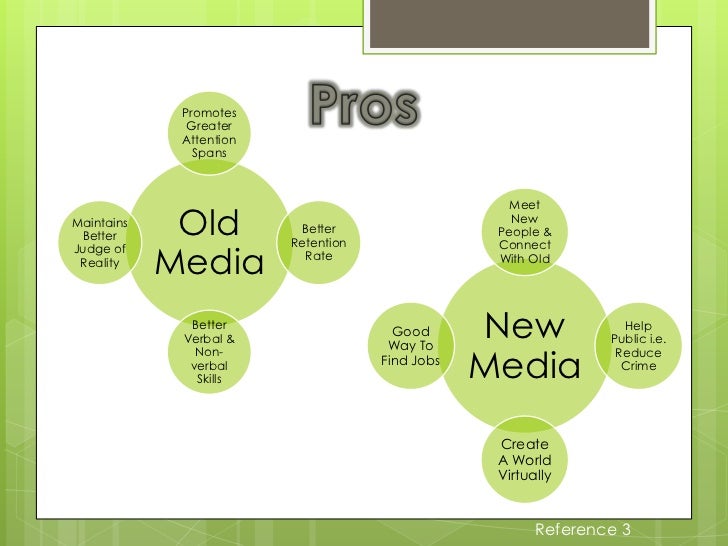
Promotes              Greater             Attention               Spans                                                   ...


Monday, October 12, 2015

Blogs Versus Wiki

Good Day Lovelies, today we will take a deeper look into Blogs vs Wikis. Before we jump right in, how was everyone's weekend. I sure hope it was good. Now, do you know what are blogs and Wikis? and how do these differ?. Lets take a look:

BLOGS
Blogs contain posts, sometimes similar to journal entries, from a person or a group. The posts are dated and listed in reverse chronological order. People can comment on posts as well as provide links to related sites, photos, and blogs.Blogs can enable an organization to quickly share information among employees, partners, or customers. People can add insight to a difficult subject area, provide inspiration and guidance, or explain a new guideline or procedure. For example, members of the Adventure Works Marketing team use a blog to present and collect feedback on strategic ideas and to recognize employee achievements.


By encouraging readers to post comments, people can also find out what their readers think about a given subject.
Blogs can be created on a Microsoft Office SharePoint Server 2007 site by using simple formatting tools that are available in Web browsers that support ActiveX controls, such as Windows Internet Explorer. You can also use some common authoring tools, such as Microsoft Office Word 2007.
Blog readers can subscribe to RSS Feeds so they can stay updated on new posts or comments.

WIKIS
A wiki is a Web site that enables users to collect team knowledge, plan events, or work on projects together. People can easily add new content or edit existing content.
1. Links to existing pages
2. Links to pages that can be created later
People need only a Web browser and permissions to the wiki site — they don't need special tools or knowledge about creating sites. People can quickly add to existing pages and easily create links to new pages.
Links in a wiki can even be created before the pages are actually created. For example, a team member may think that a subject needs related information but not have time to create a new page right away. The team member can create a link that can be turned into an actual page later by following the link and adding content to create the page.
Versions are enabled for wiki pages, which means that a version history is created that shows how the content evolves. You can see who changed the content and when it was changed, and even roll back to a previous version if a mistake is made.

Differences between blogs and wikis

Although blogs and wikis can help your team collaborate without advanced tools or specialized knowledge, there are differences in how your team can use them:
Blogs  
Blog posts are typically written by a specific group of people who provide information and insight, such as managers, technical experts, or people with unique viewpoints or writing styles.
In some blogs, the role of the people creating the blogs, often known as bloggers, is important. For example, managers can use a blog post to explain the reason behind some policy changes, team members can describe their experiences on a special project, or technicians can describe best practices or how something works in their own words.
The blog posts and comments are recorded in reverse chronological order. People can scroll through the posts, similar to reading a journal.
Wikis 
Teams usually write wikis as a collective process. After someone creates a page, another team member may add more content, edit the content, or add supporting links. The community of authors helps to ensure the accuracy and relevancy of the content.
Wikis continue to evolve as people add and revise information. Although a version history is collected, and the history is organized in chronological order, the versions aren't displayed in journal style in the default view of a wiki.
Your team may want to use a wiki to build a collective body of knowledge or to facilitate planning, such as for a team project, a publication, or a conference.
For example, the Adventure Works Marketing team uses a wiki to help newly hired staff members get started quickly. As team members run across additional resources or have additional advice to relay, they add the links and information.
Image result for blogs vs wikis

Sunday, September 27, 2015

Describe New Media

Good Day Irie Jammers! and welcome to yet another Jiggy blog session!
Today we will be taking a deeper look into New Media and what type of technologies are apart of new media. Now as explained in the previous blog, New Media most commonly refers to content available on demand through the internet' accessible on any digital device, usually containing interactive user feedback and creative participation. Common examples of new media include websites such as online newspapers, blogs, or wikis, videogames, and social media. If you think about it, it’s pretty obvious that traditional media provides value through subsidizing content through free TV and radio programs, lower-cost magazines, and chances to win prizes.  However, in exchange for this content or other value, we ALLOW advertisers to interrupt our day to tell us about their products. The difference is that social media such as Facebook, Twitter, YouTube, etc. are already FREE.  So, advertisers can’t expect us to allow them to interrupt us with commercial messages.  I mean, face it, no one really LIKES commercial! 
So, the key to making social media work is to provide some other type of value,  whether it is entertainment, information, support, or other types of rewards in exchange for hearing your commercial message.   
Lets look at how we distinguish new media from old media.

Social Media
Two-way conversation
Open system
Transparent
One-on-one marketing
About you
Brand and User-generated Content
Authentic content
FREE platform
Metric: Engagement
Actors: Users/ Influencers
Community decision-making
Unstructured communication
Real time creation
Bottom-up strategy
Informal language
Active involvement
Traditional Media
One-way conversation
Closed system
Opaque
Mass marketing
About ME
Professional content
Polished content
Paid platform
Metric: Reach/ frequency
Actors/ Celebrities
Economic decision-making
Controlled communication
Pre-produced/ scheduled
Top-down strategy
Formal language
Passive involvement

Saturday, September 12, 2015

What is New Media?


Greetings and welcome to Ramona's 'Irie' blog world. Today we will be talking about New Media, now I am pretty sure you are wondering what that is. Well New Media most commonly refers to content available on demand through the internet' accessible on any digital device, usually containing interactive user feedback and creative participation. Common examples of new media include websites such as online newspapers, blogs, or wikis, videogames, and social media. A defining characteristic of new media is dialogue. New Media transmit content through connection and conversation. It enables people around the world to share, comment on, and discuss a wide variety of topics. Unlike any of past technologies, New Media is grounded on an interactive community. New media is both replacing and enhancing old media with new technologies. You can watch TV on a laptop and stream videos that you actually want to see rather than watching regular TV broadcasts. The cell phone is now your 'go to' man for latest information, news, reports, and broadcasts. Also to communicate with people via social network, video talk with people miles away; you name it. This highlights the main point that the internet plays an important role in New Media, and this is seen in Virginia Heffernan's article as she states in an example that magazine decor used to make readers feel protected, at ease and thus receptive to advertising. However, while being online we build 'lean-tos' from whatever is around, often relying on the artless scaffolding supplied by search engines and browsers.

Image result for new media